
Exclusivity by Design: Why the Right Attention Matters More Than More Attention

The Visibility Strategy High-Trust Firms Use to Build Influence — Without the Noise
In a world obsessed with viral views and constant content, a different kind of business is quietly winning.
You won’t see them running TikTok challenges.
They aren’t chasing likes or posting five times a day.
And yet… they’re steadily landing high-value deals, retaining key relationships, and expanding their influence inside industries that rarely make headlines.
How?
They’ve stopped chasing more attention. And started focusing on the right attention.
This is the strategy high-trust, long-sales-cycle firms are using — especially in sectors like professional services, private equity, niche consulting, wealth management, and advisory roles.
They understand that in markets where deals are complex and reputations take years to build, credibility matters more than popularity.
And visibility? It still matters. But only if it’s in the right rooms.
💡 Lamborghini Doesn’t Run TV Ads — And Neither Should You
There’s a famous quote that gets shared often (and misquoted even more):
“We don’t do TV commercials. Because our customers aren’t watching TV.” — Lamborghini
Whether or not the quote is apocryphal, the principle behind it is dead on.
Luxury, high-performance brands rarely advertise to the masses. They don’t need to. They understand who they serve, and they invest in channels that reach those audiences with specificity and precision.
The same is true for your business.
If you’re a financial service leader, retirement plan advisor, M&A strategist, or other professional-services leader — your ideal client isn’t scrolling through Instagram looking for their next solution.
They’re asking trusted peers for recommendations. They’re reading industry-specific updates. They’re watching who shows up credibly and consistently in their world.
This is why platforms like LinkedIn — when used properly — outperform Google Ads or generic content marketing for high-trust industries.
🎯 Visibility ≠ Virality: Strategic Visibility Is the Play
Most firms know they need visibility. But what they don’t realize is that generic visibility can hurt more than it helps.
What they actually need is strategic visibility.
This means showing up:
Where your buyers spend time professionally
With clarity about your value
With third-party proof that builds credibility
In a way that matches the tone and expectations of high-trust industries
According to LinkedIn’s B2B Thought Leadership Impact Report, 61% of decision-makers say thought leadership builds trust when evaluating a vendor. But they’re not referring to fluff pieces or recycled listicles.
They’re looking for insight.
They want to see a clear point of view, a depth of understanding, and a signal that the person behind the brand actually knows what they’re doing.
🕵️ Behind-the-Scenes Positioning: Where Long-Term Growth Happens
At Linkability, we work with firms that often operate behind the scenes.
They’re not flashy.
They’re busy serving clients — closing acquisitions, navigating transitions, protecting assets, optimizing benefits, or solving legacy problems that require a human touch.
These firms don’t want 10,000 leads.
They want 10 right-fit conversations that turn into long-term relationships.
Which is why we help them:
Identify high-value targets via Sales Navigator and API-level filters
Position their expertise through visible authority on LinkedIn
Build digital credibility that matches their offline success
Create private sequences and outreach campaigns that get responses
Here’s the thing: You don’t need everyone to know you.
You need the right people to trust you.
🔎 Why Searchability Matters — and Why Google Isn’t Enough
You’ve likely heard, “If I Google you, what shows up?”
That’s still important — especially in reputation-sensitive industries.
But the game has shifted.
Clients are searching across multiple digital touchpoints before ever reaching out.
Gartner’s research confirms that B2B buyers now touch 7–10 sources before engaging with a salesperson. That means LinkedIn, podcast appearances, partnerships, articles, and even comments all play a role.
Google used to be the front door.
Now? It’s more like the hallway.
Your buyer might click through your LinkedIn, find an article, notice shared connections, or see a podcast feature before they ever visit your website.
So if you’re still betting everything on SEO, you’re likely invisible where it counts.
⚠️ The Real Risk: A Weak Digital Reputation
In high-trust industries, reputation is currency.
And here’s what we’re seeing more and more: Professionals with excellent offline reputations but weak online visibility.
Sometimes it’s because they don’t know what to post.
Sometimes it’s because they’re not comfortable being the face of the business.
Other times, it’s because they’ve acquired a business with online baggage.
Here’s the problem: If your digital footprint doesn’t tell your story well, someone else’s will.
And that can be dangerous.
Reputation management today means being proactive — not reactive.
Research your competitors’ positioning
Clarify your unique differentiation
Build profiles for your key team members
Consistently create content that educates and builds trust
Launch outreach sequences to spark new conversations
According to PwC’s “Trust in Business” survey, 71% of consumers say they’ve stopped doing business with a company due to a loss of trust.
In professional services, that number is even higher — because referrals aren’t always enough to overcome a weak digital presence.
🚫 Content Alone Isn’t the Strategy
Content is still important. But content alone isn’t enough.
Five years ago, we stopped doing standalone content packages.
Why?
Because even the best-written article or thought-leadership post needs a distribution engine behind it.
When content is combined with outreach + profile positioning + networking, it works. When it’s not, it just… floats.
That’s why our current clients — from solo advisors to mid-sized teams — all operate within a system:
Outreach that builds the right network
Profiles that create trust on contact
Content that reinforces authority
Systems that bring it all together
It’s not about shouting louder. It’s about showing up smarter.
📈 What Professional Services Leaders Are Doing Instead
If your firm has hit a growth wall, here’s what we’re seeing work right now:
Refining your ICP Not everyone’s a fit. Go narrower. Be clearer.
Running highly targeted LinkedIn campaigns Not spam. Not ads. Personalized outreach that gets replies.
Upleveling your team’s digital footprint Profiles, presence, and positioning — especially for partners and client-facing staff.
Building authority assets Case studies, industry breakdowns, and point-of-view content (shared on and off LinkedIn).
Creating conversation momentum Outreach + follow-up. Conversation starters that lead to qualified calls.
Final Thought: Scale Starts with Trust
If referrals built the business — great.
But if you’re trying to scale that business, you need systems that build trust at scale.
That doesn’t mean going viral.
It means being findable. It means being trusted. It means being visible to the right people — with the right message.
That’s what we do. And we’re happy to help you map it out.
Let’s build something that lasts.
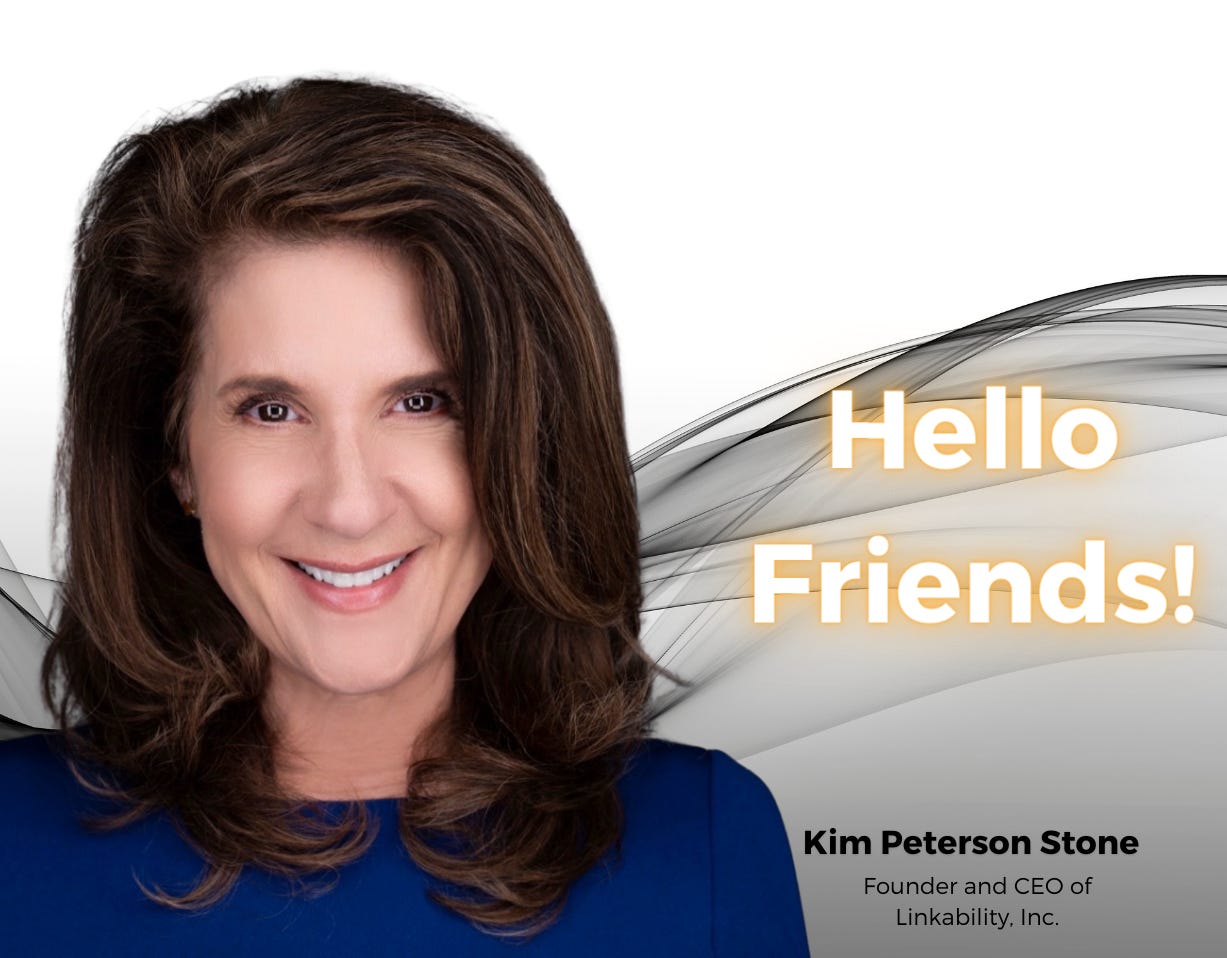
Kim Peterson Stone — three-time founder, keynote speaker, and LinkedIn thought-leader with 225 K+ followers — teaches executives and entrepreneurs how to build unshakable authority, attract targeted opportunities, and future-proof their careers through strategic LinkedIn thought-leadership. As CEO of Linkability.us, she’s helped everyone from startups to Fortune 500 teams work smarter, amplify their influence, and solve their toughest growth challenges.
Ready to become the go-to expert in your field? Let’s talk.